Wondering why one Coronado home feels like a storybook cottage, another looks straight out of old California, and a third reads as sleek coastal custom? That mix is part of what makes Coronado so memorable for buyers and sellers alike. If you are browsing listings or thinking about your home’s position in the market, it helps to know the architectural language of the island. Let’s dive in.
Why Coronado Architecture Stands Out
Coronado’s look did not happen by accident. The city describes its character as a charming ocean village with broad streets, low building profiles, alley access, and a strong village-scale landscape setting.
That means architecture here is tied to more than curb appeal. In Coronado, a home’s style often connects to its age, its location within the city, and in some cases, preservation rules that can affect changes over time.
The city’s adopted Historic Context Statement and Historic Resources Inventory evaluate the historic core through 1970 and use those findings to identify architectural styles and preservation priorities. That is especially important because the survey does not include Coronado Cays and certain military or federal lands, so the look of the historic Village is different from newer planned or waterfront areas.
The Main Styles You See in Coronado Homes
If you want the quickest shorthand, Coronado’s most common historic single-family styles are Craftsman, Tudor Revival, and Spanish Colonial Revival. Around those core styles, you will also see beach cottages, Queen Anne homes, Colonial Revival houses, and later Ranch or contemporary forms.
For buyers, that makes listing photos easier to read. For sellers, it helps you understand how your home may be described, compared, and marketed.
Craftsman and Bungalow Homes
Craftsman homes are some of the easiest to spot in Coronado once you know what to look for. They often have low or gently sloping roofs, exposed rafters, wood posts or brackets, and strong porch connections that make the house feel grounded and welcoming.
This style family also includes bungalow variants, which tend to feel compact, practical, and handcrafted. In Coronado, the wood emphasis and indoor-outdoor relationship fit naturally with the island’s older residential character.
If you are scanning photos, common clues include:
- Low-pitched or gabled roofs
- Exposed rafters or wide eaves
- Wood trim and porch posts
- A low, horizontal feel
- Porch or patio spaces that are visually important to the front of the home
The city’s preservation materials and register include several local Craftsman examples, including homes on C Avenue, G Avenue, Adella Avenue, B Avenue, E Avenue, and 1st Street. That tells you this is not a rare one-off style in Coronado. It is part of the island’s architectural foundation.
Beach Cottages
If a home feels especially casual, compact, and coastal, you may be looking at Coronado’s local beach cottage type. The city’s 2025 Historic Context Statement describes this type as small and modest in scale, with a gable roof, generous wood cladding, and Craftsman influence.
These homes connect closely to Coronado’s early resort identity. The Coronado Historical Association notes that Tent City operated south of the Hotel del Coronado from 1900 to 1939, with several hundred tents and thatched-roof cottages that helped shape the area’s summer beach culture.
For many buyers, beach cottages are the style that feels most distinctly tied to old Coronado. They are often less formal than revival styles and tend to carry an easygoing visual charm.
Spanish Colonial Revival and Related Spanish Styles
Spanish Colonial Revival is one of the most visible architectural styles in Coronado. If you picture stucco walls, red tile roofs, arched openings, wrought-iron details, and courtyards, you are in the right style family.
The city describes these homes as often having asymmetrical façades, simple rectangular or L-shaped massing, low height, elaborate chimney tops, and covered arcades or courtyards. In practical terms, they tend to feel warm, textured, and classically Southern Californian.
Related labels also appear in Coronado, including:
- Mission Revival
- Spanish Eclectic
- Spanish Bungalow
- Spanish Revival
- Spanish Moderne
- Spanish Hacienda
You may see some overlap in how these homes are described in listings or preservation records. Still, the visual cues are usually consistent: stucco, tile, arches, and a strong connection between indoor and outdoor spaces.
Tudor Revival Homes
Tudor Revival brings a very different look to the island. These homes often stand out for their steeply pitched front-facing gables, asymmetrical façades, large chimneys, and decorative half-timbering.
Compared with Craftsman or Spanish homes, Tudor houses often read as more vertical and more dramatic from the street. If you notice a home that feels storybook-like or distinctly European in influence, Tudor Revival may be the reason.
The city identifies Tudor Revival as one of Coronado’s most common historic single-family styles. That makes it a familiar part of the local streetscape, even though it looks very different from the classic beach cottage image many people first associate with Coronado.
Queen Anne and Folk Victorian Homes
For buyers who love ornate historic detail, Queen Anne and Folk Victorian homes are some of the most distinctive properties in Coronado. Queen Anne homes often feature turrets, bays, projecting forms, steep roofs, and decorative porch details.
That style carries extra local relevance because the Hotel del Coronado itself was built in the Queen Anne style. Its silhouette helped shape Coronado’s early resort identity and still influences how many people picture the island’s historic architecture.
Folk Victorian Cottage is a simpler related form that still reflects Coronado’s oldest residential development period. These homes may not be as elaborate as full Queen Anne examples, but they still contribute to the layered, historic texture of the Village.
Colonial Revival and Other Revival Styles
One of the easiest mistakes to make in Coronado is assuming all historic homes fit just one or two categories. In reality, the city’s designated register shows a broad mix of revival styles beyond the most common ones.
That mix includes Colonial Revival, Mediterranean, Dutch Colonial Revival, French Eclectic, and more. So when you hear the phrase “historic Coronado home,” it does not point to a single look. It points to a wide range of designs built across different periods.
How Newer Coronado Homes Differ
Not every Coronado home belongs to the early historic style set. The city’s Historic Context Statement also documents postwar growth, including Ranch, Contemporary, and Mid-Century Modern forms.
Ranch homes usually have a one-story, low, broad profile with an off-center entry, low-pitched roof, large picture windows, and attached or integrated garages. Visually, they are much different from the older cottages and revival homes in the Village.
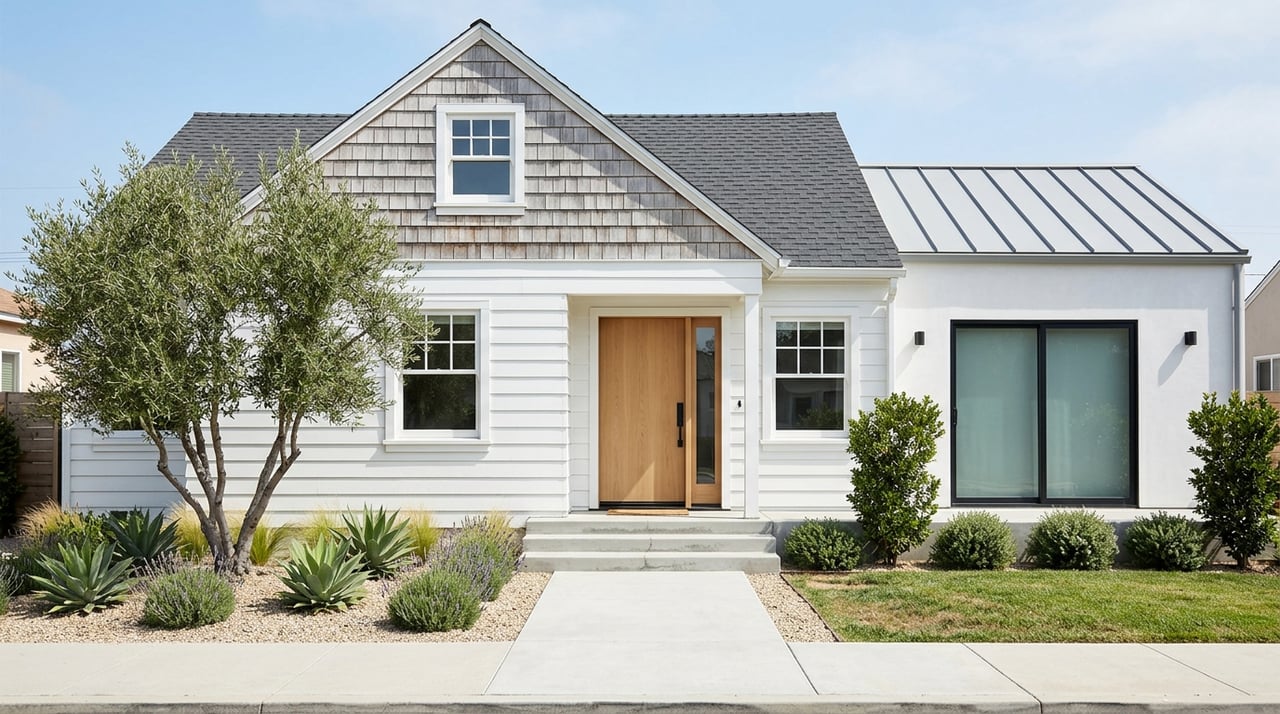
Newer custom homes in Coronado may also feel more contemporary or transitional. Even so, the city’s design guidance still emphasizes compatibility with the surrounding built environment, village scale, and the historic character tied to Coronado’s setting.
Coronado Cays Has Its Own Context
Coronado Cays is important to mention separately because it is a planned community with its own design review authority. The citywide historic survey excludes Coronado Cays, which helps explain why homes there often read differently from properties in the historic Village.
In broad terms, homes in the Cays are better understood as part of a newer, context-sensitive coastal environment rather than the classic historic-core style mix. If you are comparing neighborhoods in Coronado, this distinction matters.
How to Read Architectural Clues in Listings
You do not need to be an architect to get more out of listing photos. A few key terms can help you quickly identify what style family a home may belong to.
Massing and Façade
Massing means the overall shape and volume of the house. In Coronado, many historic homes have a low, horizontal profile, while Queen Anne and some revival styles are more vertical and expressive.
Façade means the front face of the home. Spanish Colonial Revival often has an asymmetrical façade, while Colonial Revival homes are more likely to look balanced and symmetrical.
Rooflines and Eaves
A gable roof or low-pitched roof can tell you a lot. Craftsman, bungalow, beach cottage, and Ranch homes often use these forms, although the details around them differ.
Exposed rafters and deep eaves are especially strong Craftsman clues. If you see those features paired with wood trim and porch posts, you are likely in the Craftsman family.
Materials and Decorative Features
Stucco and red tile roofs usually point toward Spanish Colonial Revival, Mission Revival, or related Spanish-influenced styles. Wrought iron, arches, courtyards, and arcades reinforce that reading.
Half-timbering, steep gables, turrets, and projecting bays usually signal Tudor Revival or Queen Anne rather than Spanish or Craftsman. Large picture windows and attached garages often suggest Ranch or later postwar construction.
Why Style Matters When You Buy or Sell
Architectural style is not just about taste. In Coronado, it can affect how a home is priced, marketed, maintained, and updated.
If a property is a designated historic resource in a residential zone, it may be eligible for a Mills Act property-tax reduction. At the same time, exterior changes to designated historic resources require a Historic Resource Alteration Permit, so owners need to understand the local process before planning major visible updates.
For buyers, that means a historic home may come with both charm and responsibilities. For sellers, it means your home’s style and preservation status may influence buyer interest, marketing strategy, and how improvements are presented.
The Bottom Line on Coronado Home Styles
Coronado architecture is layered, local, and easy to appreciate once you know the basics. Beach cottages and bungalows often feel compact and wood-forward. Historic homes most commonly fall into styles like Craftsman, Spanish Colonial Revival, Tudor, Queen Anne, and Colonial Revival. Newer homes, especially outside the historic core, often lean more contemporary or Ranch-influenced.
If you are buying, style recognition helps you read listings faster and ask better questions. If you are selling, it helps position your home in a way that feels accurate, compelling, and true to Coronado’s unique character.
Whether you are comparing historic Village homes, newer custom properties, or a residence with preservation considerations, working with a local expert can make the process much clearer. If you want help understanding how architectural style may affect your buying or selling plans in coastal San Diego, connect with Nadia Kasyouhannon.
FAQs
What architectural styles are most common in Coronado homes?
- The city’s Historic Context Statement identifies Craftsman, Tudor Revival, and Spanish Colonial Revival as the most common historic single-family styles in Coronado.
What does a Coronado beach cottage usually look like?
- A Coronado beach cottage is typically small and modest in scale with a gable roof, generous wood cladding, and visible Craftsman influence.
How can you spot a Spanish Colonial Revival home in Coronado?
- Look for stucco walls, red tile roofs, arched openings, wrought-iron details, low height, and courtyard or arcade elements.
Are Coronado Cays homes the same style as historic Village homes?
- No. Coronado Cays is a separate planned community with its own design review authority, and the citywide historic survey does not include it.
Do historic homes in Coronado come with special rules?
- Yes. Designated historic resources may be eligible for Mills Act property-tax reduction, and exterior changes require a Historic Resource Alteration Permit.
What features usually suggest a Craftsman home in Coronado?
- Common signs include low or sloping roofs, exposed rafters, wood trim, porch posts, and a low, horizontal look.
What does Ranch architecture look like in Coronado?
- Ranch homes usually have a one-story, broad profile, a low-pitched roof, large picture windows, and attached or integrated garages.